Research Center

gas properties simulation activity

Published by Www1 Stjameswinery
5 min read · May 09, 2026

We present a comprehensive overview of gas properties simulation activity. This comprehensive guide covers the essential aspects and latest developments within the field.

gas properties simulation activity

gas properties simulation activity remains a foundational element in understanding the broader context. Our automated engine has curated the most relevant insights to provide you with a high-level overview.

"gas properties simulation activity represents a significant milestone in our collective understanding of this niche."

Below you will find a curated collection of visual insights and related media gathered for gas properties simulation activity.

Curated Insights

Pump gas molecules to a box and see what happens as you change the volume, add or remove heat, and more. Measure the temperature and pressure, and discover how the properties of the gas vary …
Need a gas-filled cylinder equipped with a piston? How about a thermometer, a pressure gauge, and a means of determining the volume and the number of moles of gas inside the cylinder? No worries …
Pump gas molecules to a box and see what happens as you change the volume, add or remove heat, change gravity, and more. Measure the temperature and pressure, and discover how the properties …
Explore gas laws, kinetic energy, and pressure with this PhET simulation activity. Ideal for high school physics and chemistry students.
Feb 22, 2025 · This simulation provides an interactive simulation of an ideal gas. Users can change the number of gas molecules in a chamber, change the volume, add/remove heat, and change gravity. …
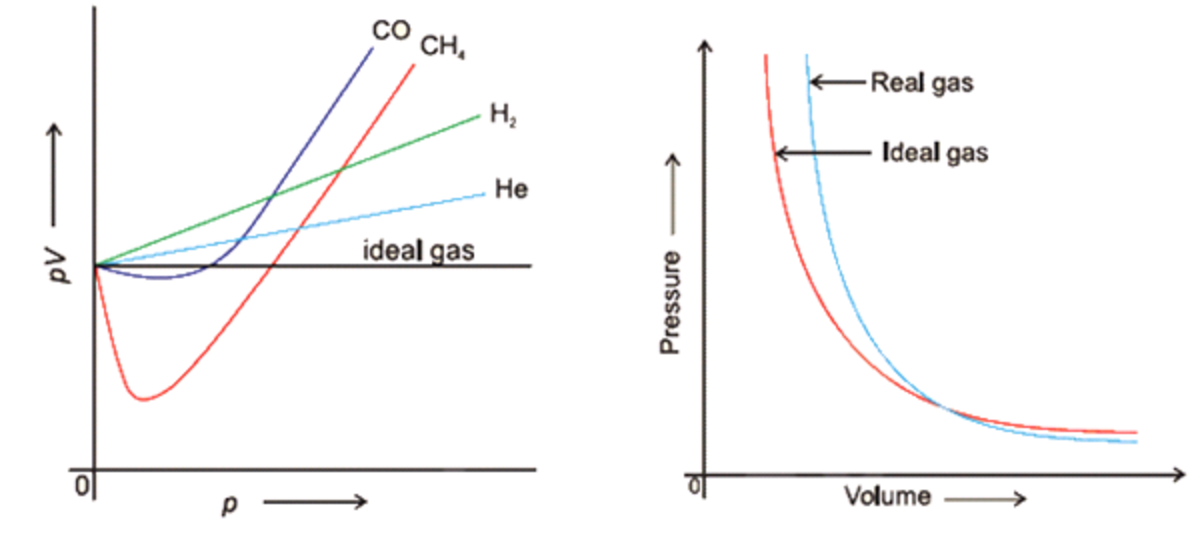
The document outlines a virtual lab activity focused on gas properties, including objectives to describe relationships among pressure, volume, temperature, and gas laws.
May 1, 2026 · In this activity, students will use a simulation to view both macroscopic and particle-level animations modeling real-world scenarios to demonstrate the relationships between volume, …
In this activity you’ll use the Gas Properties PhET Simulation to explore and explain the relationships between energy, pressure, volume, temperature, particle mass, number, and speed.
This module from PhET provides interactive simulations of each of the three gas laws - Boyle's, Charles', and Amonton's. Students will experiment with each simulation and deduce the type of …
‪Gas Properties‬.

Captured Moments

Found this helpful? Share it: